How Japanese People Farm Indoors at Home
Discover how Japanese people grow fresh food inside their homes. Learn simple indoor farming techniques you can try as a beginner home gardener today.

Japan is a country where space is genuinely limited, yet home-grown food is genuinely common. Apartment dwellers in Tokyo, Osaka, and beyond have quietly developed a practical, low-fuss approach to indoor farming that fits into small kitchens, narrow balconies, and spare corners of a living room. If you have ever wondered how to grow something edible inside your home without a garden, the Japanese approach offers a very grounded place to start.
Why indoor farming became a daily habit in Japan
Japan has some of the most densely populated cities in the world, and outdoor gardening space is a luxury most urban residents simply do not have. At the same time, Japanese cooking has always valued fresh, seasonal ingredients at the table. That combination pushed home cooks toward growing small amounts of herbs, greens, and sprouts right inside the home, close to where the food gets prepared.
There is also a cultural thread of mindfulness around food production. Growing even a small pot of shiso or a tray of daikon radish sprouts connects a person to where food comes from. It is not about replacing a grocery run entirely. It is about adding something fresh, something you grew yourself, to an ordinary meal on an ordinary weekday.
What Japanese home growers typically grow indoors
The crops most commonly grown indoors in Japanese homes share a few traits: they are fast, they are compact, and they produce something useful in a short window of time. You will not find someone attempting full-size tomatoes under a single grow light in a studio apartment. Instead, the focus stays on greens, herbs, and sprouts that thrive in shallow containers with modest light.
- Shiso (perilla): A fragrant herb central to Japanese cooking. Grows well in a 6-inch pot on a bright windowsill. Sow seeds about 1 inch apart, thin to one plant per pot, and expect harvestable leaves in 4 to 6 weeks.
- Mitsuba (Japanese parsley): Prefers indirect light, which makes it ideal for rooms without south-facing windows. Space seeds 2 inches apart in a shallow tray. Ready to snip in 5 to 7 weeks.
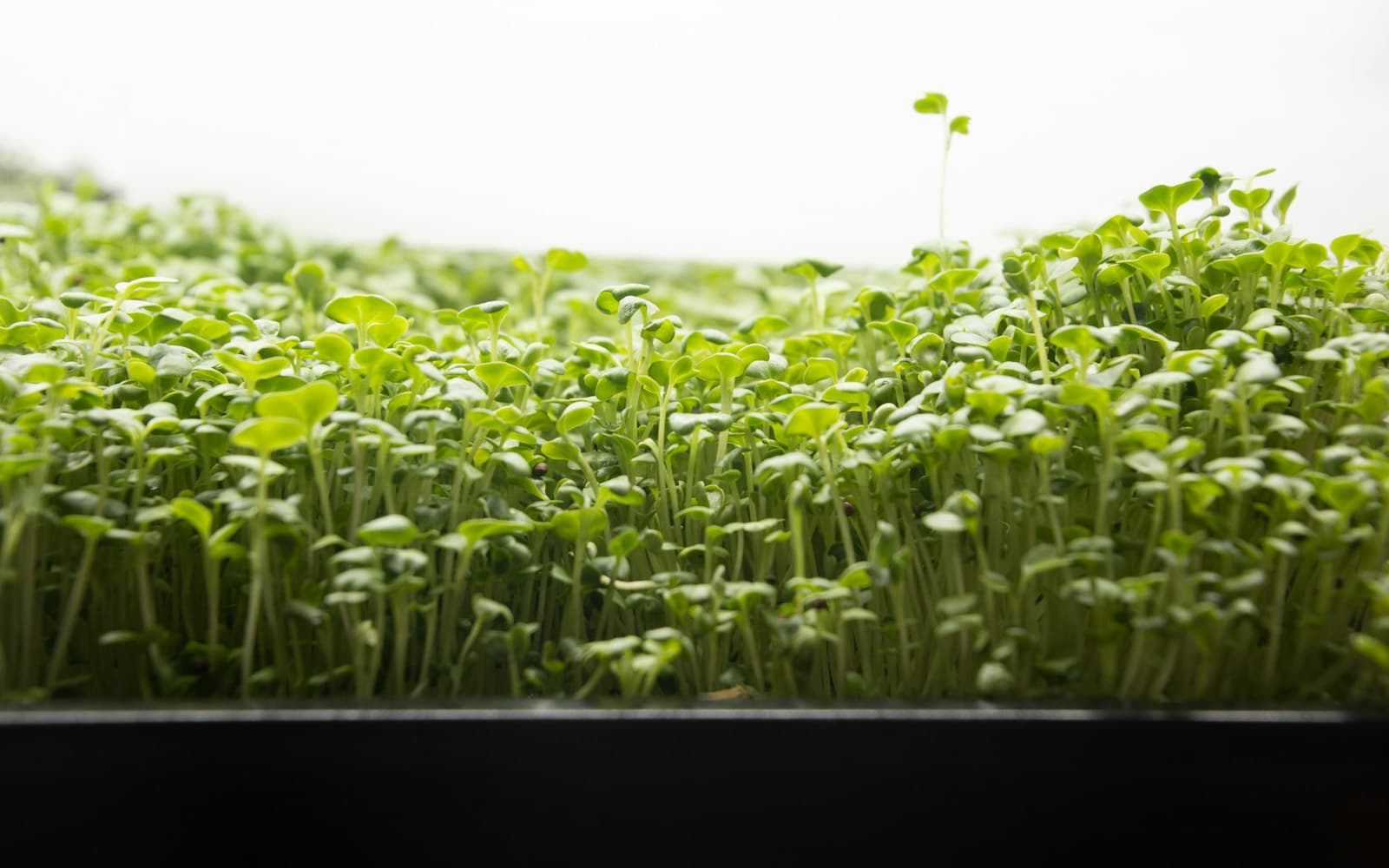
- Daikon radish microgreens: One of the fastest crops you can grow. Sow seeds densely across a tray, water from below, and harvest in 7 to 10 days. The flavor is mildly spicy and works well as a topping for soups or rice dishes.
- Komatsuna (Japanese mustard spinach): Grows quickly in cool indoor temperatures between 55 and 70 degrees Fahrenheit. Sow seeds half an inch deep, space plants 3 to 4 inches apart in a container at least 4 inches deep, and harvest outer leaves starting at 3 to 4 weeks.
- Bean sprouts and soybean sprouts: Grown in jars or dedicated sprouting trays with no soil at all. Rinse twice daily and harvest in 4 to 5 days.
- Green onions (negi) re-grown from scraps: Place the root ends of store-bought green onions in a small glass with an inch of water. Set near a window. New growth appears within a few days and can be snipped repeatedly for 2 to 3 weeks before replanting.
If you are curious about the difference between sprouting and growing microgreens, the post on Microgreens vs. Sprouts: What's the Difference? breaks that down clearly and is worth reading before you decide which method fits your space.
Light, containers, and the practical setup
Most Japanese indoor growers rely on natural window light first, supplemented by small LED grow lights when needed. A south- or east-facing window that gets four to six hours of indirect or gentle direct light is enough for most of the crops listed above. Shiso and komatsuna appreciate a bit more direct light, while mitsuba actively prefers shade.
Containers tend to be shallow and practical rather than decorative. Plastic seedling trays, repurposed food containers with drainage holes punched in the bottom, and small ceramic pots are all common. Drainage matters more than the container material. Roots sitting in standing water will rot within days regardless of how carefully you water the top.
A thin layer of well-draining potting mix, not garden soil, works best for most of these crops. For microgreens and sprouts, no soil is needed at all, which is part of why those methods are so popular in small spaces. If you want a more detailed look at setting up containers for food growing, Container Gardening 101: Grow Food in Small Spaces covers the fundamentals in plain terms.
Timing and temperature inside the home
One advantage of growing indoors is that you are not working around frost dates. Most Japanese apartments stay between 60 and 75 degrees Fahrenheit year-round, which is a comfortable range for cool-season greens and herbs. That said, temperature swings near drafty windows in winter can slow germination or stress young plants. Keep seedling trays away from cold glass on freezing nights.
| Crop | Days to germination | Days to first harvest | Minimum container depth |
|---|---|---|---|
| Daikon microgreens | 2 to 3 | 7 to 10 | 1.5 inches |
| Green onion (from scrap) | N/A | 5 to 7 | 2 inches (water glass) |
| Shiso | 7 to 14 | 28 to 42 | 6 inches |
| Komatsuna | 4 to 7 | 21 to 28 | 4 inches |
| Mitsuba | 10 to 14 | 35 to 49 | 4 inches |
| Bean sprouts (jar method) | 1 to 2 | 4 to 5 | No soil needed |
How to bring this into your own kitchen
The easiest entry point is microgreens or sprouting, because both require almost no equipment and produce results within a week. Daikon radish microgreens are a particularly good first crop because they germinate reliably, grow quickly, and the flavor is genuinely useful in cooking rather than just decorative. The How to Grow Microgreens at Home (Step-by-Step for Beginners) guide walks through the full process from seed to harvest in plain language, which makes it a helpful companion to this post.
Once you are comfortable with microgreens or sprouts, adding a pot of shiso or mitsuba is a natural next step. Shiso in particular is difficult to find fresh in most Western grocery stores but grows easily indoors and adds a flavor to Japanese-inspired dishes that nothing else quite replicates.
Keeping track of what you sow and when makes the whole process less guesswork and more routine. If you find yourself growing more than one crop at a time, a simple tracking sheet helps you remember sow dates, expected harvest windows, and what worked well. The Seed-Starting Tracker available in the shop is a straightforward printable that does exactly that without overcomplicating things.
Frequently asked questions
Do I need a grow light to grow food indoors in a Japanese style?
Not always. Many of the crops favored in Japanese indoor growing, including mitsuba, bean sprouts, and green onion scraps, do fine in indirect natural light or even low light. Shiso and komatsuna will grow faster and more robustly with a few extra hours of light, so a small LED grow light is helpful if your windows face north or get fewer than four hours of light per day. It is not a requirement to start.
Can I grow these crops year-round inside?
Yes, with some attention to temperature. Indoor growing removes the frost variable entirely, which is one of its main advantages. Cool-season crops like komatsuna and mitsuba actually prefer the lower end of typical indoor temperatures, around 60 to 65 degrees Fahrenheit, so a cooler room in autumn or winter can work in your favor. Avoid placing seedlings directly against cold windows during freezing weather.
How often should I water a small indoor herb or greens container?
Check the soil daily by pressing a finger about half an inch into the mix. Water when it feels dry at that depth, not on a fixed schedule. Shallow containers dry out faster than deep ones, and heated indoor air in winter can pull moisture out of soil quickly. Water gently at the base of plants rather than overhead when possible, and always allow excess water to drain away completely.
Is indoor-grown food nutritionally the same as outdoor-grown food?
The nutritional content of indoor-grown greens and herbs is generally comparable to outdoor-grown equivalents, particularly for fast-growing crops like microgreens and sprouts that are harvested young. Sunlight intensity and soil quality do influence nutrient levels over longer growing periods, but for the short-cycle crops most common in Japanese indoor gardening, the difference is not significant enough to discourage home growing.
Share this article